- Search for the paperwork, written codes and the backup key before you call.
- On a keypad safe, weak batteries are a common reason it will not open.
- Do not hammer on the safe or try to force the door, because that can make opening it harder.
Step 1: Search for the code and the paperwork
Before anything else, look for the combination in writing. People who buy a safe are usually told to write the code down and keep it somewhere outside the safe, and many of them did exactly that, then forgot where. A slow, careful search often turns it up.
- The original box, the owner's manual or a paper tucked inside the manual
- A desk drawer, or a folder labeled for the house or for important papers
- A sealed envelope left with a relative, a lawyer or in a bank safe deposit box
- Notes saved in a phone or written in an old address book
If the safe came with a house you bought, ask the sellers or their agent, because the code sometimes sits in a folder of house papers. If the safe belonged to a relative who has passed away, ask family members and whoever is handling the estate whether they have seen a code or a key.
Step 2: Check the simple things first
Many safes that seem locked for good are suffering from something simple. Keypad safes are the most common case: weak batteries can make the keypad beep, flash or reject a code that is actually correct. Replace every battery with fresh ones of the type the manual calls for, then try your code again slowly. Many keypad safes also have a backup key, and the manual shows where its keyhole is.
Dial safes are easy to misdial, especially when nobody has opened the safe for a long time. Follow the dialing steps in the manual slowly, counting each turn, before deciding the combination is wrong.
- Replace the keypad batteries with new ones of the correct type.
- Enter the code slowly, pressing each button firmly.
- Look for the backup key and its keyhole, using the manual.
- On a dial safe, follow the manual's steps and count each turn.
Step 3: Call us to open it on site
Our safe opening service comes to the safe, wherever it is in your home or business. We look at the type of safe, its locks and its condition, explain the options before we start and do the work where the safe already sits.
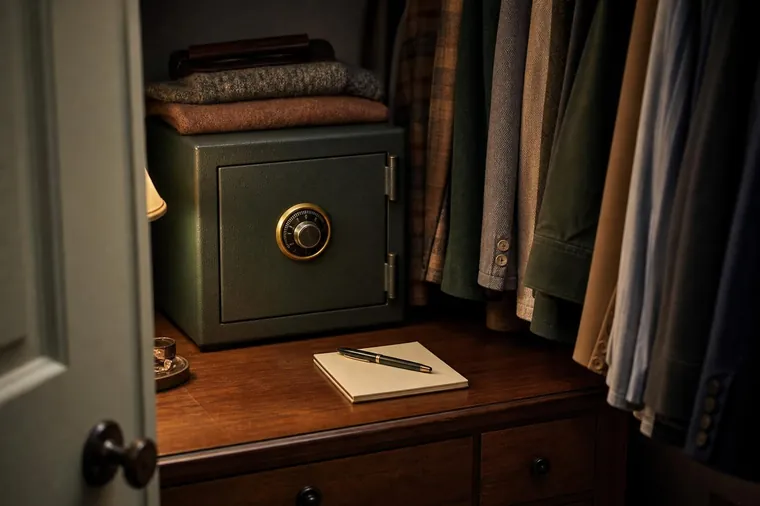
Safes come in many shapes: small fire safes on a closet floor, tall gun safes in a basement, office safes under a desk and wall safes behind a panel. What matters most to us on the phone is the kind of lock it has and where it is.
- We ask about the safe and its lock before we come out.
- At the safe, we explain what we plan to do before we start.
- We handle the opening on site, in the room where the safe sits.
- Once it is open, we talk through what the safe needs, if anything, before you lock it again.
If the safe uses a key and the key snapped off in its lock, mention it when you call, because it changes how we plan the opening. Our pages on broken key extraction and a key that broke off in a lock cover what to leave alone until we arrive.
Step 4: Decide who else should be able to get in
A combination that lives in one person's memory is easy to lose, especially for a safe that only gets opened a few times a year. Once your safe is open, think about who else should be able to get in if you are traveling, ill or unable to open it yourself.
- At home, tell one other adult you rely on where the written code is kept.
- At a business, keep the list of people who know the code short and written down.
- In your estate papers, mention the safe and where its code is kept.
- Keep the manual with your other house papers, so the backup key and battery type are easy to find.
What to tell us when you call
These details help us plan for your particular safe before we arrive.
- What kind of safe it is: dial, keypad, key or a mix of those
- Where it is: a closet floor, a basement, an office or built into a wall
- What happened: a forgotten code, a dead keypad, a lost key or an inherited safe with no paperwork
- Any paperwork, numbers or keys you found during your search
- Whether it is at a home or a business, and the address
Gather what you can, then call us at (484) 488-7719, and we will go through it with you and tell you honestly when we can come.
How to avoid this next time
A safe is only useful if you can get into it. The habits that protect your access are simple and take very little time.
- Write the combination down, seal it in an envelope and keep it outside the safe, with someone you rely on or in a bank safe deposit box.
- Keep the backup key apart from the safe, never taped to it or tucked in the same closet.
- Replace keypad batteries on a schedule, before the keypad starts complaining.
- Open the safe now and then, so the code stays fresh in your memory.
Questions people ask
My father passed away, and nobody in the family knows the combination to his safe. What can we do?
Search his papers first, including files, desk drawers and anything the lawyer or executor is holding, because a written code often turns up. If nothing does, call us and tell us what kind of safe it is and where it is. We come to the house, explain the options and handle the opening where the safe sits.
My keypad safe beeps and will not open, even when I type the code I know is right. Is it broken?
Replace the batteries first, because weak batteries are a common reason a keypad safe beeps and rejects a correct code. Use fresh batteries of the type the manual calls for, then enter the code slowly. If it still will not open, look for the backup key, and if that does not help, call us and we come to the safe.
Our safe is bolted down inside a small closet. Can you still work on it there?
We work on safes where they are, so a safe bolted inside a closet stays put, and if the space around it is too tight to work in, we tell you before anything starts. Tell us roughly how much room there is around it and what kind of lock it has when you call. That helps us plan the visit, and we explain the options at the safe before any work begins.
The key to our office safe is lost, but we still know the combination. Can you help us get in?
Tell us which locks the safe has when you call, because some safes need both a key and a combination to open. We come to the safe, look at the key lock and talk through the options for opening it with you. Once it is open, keep any replacement key in a separate place from the safe itself.