- The chip in the key head talks to the car whenever you start the engine.
- A plain metal copy can open the door but will not start a car that expects a chip.
- A new chip key can usually be programmed at the car, without a tow.
Step 1: Know what the chip does
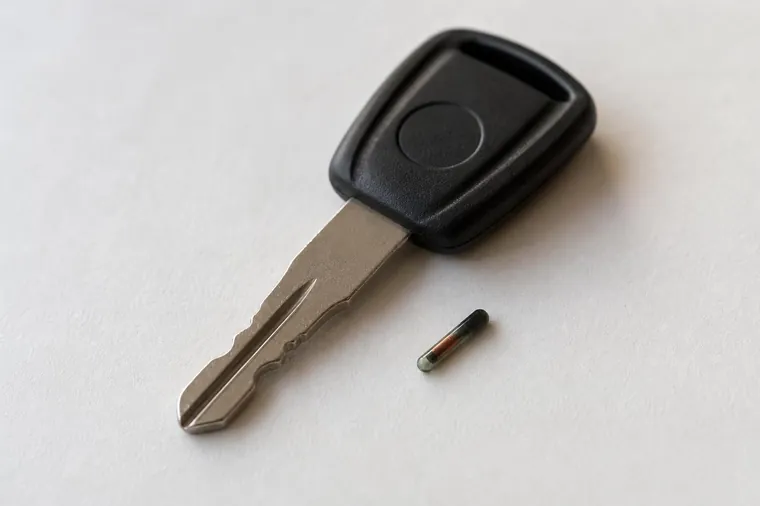
Look at the head of your car key. If it is a chunk of plastic rather than bare metal, there is a good chance a transponder is tucked inside. It is often a small capsule, or a chip on the key's circuit board, and it has no battery of its own. When you turn the key, a ring of wire around the ignition sends out a weak signal, and the chip answers with a code.
The car compares that code with the list of keys it knows. If it matches, the engine starts as usual. If it does not, the car may crank and then stall, or refuse to crank at all, and a small security light on the instrument panel often blinks to tell you it did not recognize the key.
- The key has a thick plastic head instead of bare metal.
- The car is from the late 1990s or newer.
- The owner's manual mentions an immobilizer or an anti-theft key.
- A copied key opens the doors but will not start the engine.
Step 2: Understand why a basic copy will not start the car
Plenty of key-cutting counters cut only the metal part. That copy opens your doors and turns the ignition, which makes it look like a success, and then the engine refuses to stay running because the car never heard from a chip it recognizes. Some counters can copy certain chips and others cannot, and it is not always obvious which kind of copy you walked away with.
There is nothing wrong with your car when this happens. The immobilizer is doing its job. It just needs a key with a chip the car has been told to accept.
Step 3: See how a new chip key gets programmed
There are two common ways to give a key a chip the car accepts. One is copying the code from a working key onto a new chip. The other is adding the new key to the car's memory through the diagnostic port under the steering column. Which one fits depends on the car, and when every key is lost, there is no working key to copy, so on most cars the new key has to be added to the car's memory.
Our transponder key programming service does this at the car, in the way your car allows. Here is what that visit looks like:
- We check the year, make and model and confirm which chip the car uses.
- We cut the blade to fit your door lock and, on cars with a turning key, the ignition.
- We program the chip so the car recognizes it.
- We start the car several times and test any existing keys you have with you too.
If you already have one working key and simply want a backup, car key duplication gives you a copy that carries a programmed chip, not just a matching piece of metal.
Step 4: Rule out problems that are not the key
Not every car that refuses to start has a key problem. A weak car battery, a failing starter or an empty tank can look similar at first. A useful clue is that security light. If it behaves normally and the engine cranks strongly but will not catch, the key is probably fine.
- Slow, labored cranking points to the car battery.
- A single click and nothing else often points to the starter.
- A blinking security light with a key the car should know points to the chip.
When the key itself is worn, cracked or bent, we make a fresh one with car key replacement. If your key is part of a fob with buttons, our guide to a key fob that stopped working covers the battery side of things.
What to tell us when you call
These answers let us bring the right chip and the right equipment the first time.
- The car's year, make and model
- Whether you have any working key at all, and how many
- Whether a copied key turns the ignition but will not start the engine
- What the security light does when you try to start the car
- Where the car is parked, so we can tell you honestly when we can be there
If you are not sure about any of these, that is fine, because we work through the questions with you when you call us at (484) 488-7719.
How to avoid this next time
Most chip key trouble starts with having only one programmed key, or with a copy that was never programmed in the first place. A little planning keeps you from finding out in a cold parking lot.
- Keep at least two programmed keys for every car, and keep the spare at home.
- After any new copy is made, test it by starting the engine, not just by turning the lock.
- Keep chip keys away from hard drops and heavy rings; the capsule inside can crack.
- If you buy a used car with one key, have a second key programmed early on.
If you ever do end up with no working key at all, our guide on losing every car key walks through what comes next.
Questions people ask
I had a key copied at a hardware store and it unlocks the door, but the car will not start. Why?
Bring that copy out when we come to the car, because the metal is probably fine and only the chip is missing or unprogrammed. We program a chip the car accepts, or cut and program a new key if the copy is not suitable. Then we start the engine several times to check that the car recognizes it.
Does a transponder key have a battery inside that I need to change once in a while?
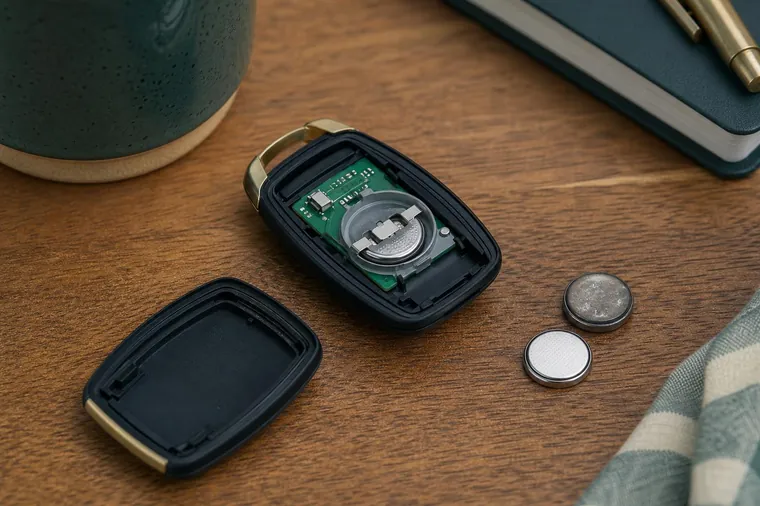
You can leave a plain transponder key alone, because the chip has no battery and gets its power from the ignition when you turn the key. If your key also has lock and unlock buttons, those buttons usually run on a small coin battery, and that battery does need changing when the range starts to shrink.
My security light keeps flashing and the car will not start with my usual key. What does that mean?
Try your spare key first. If the spare starts the car, the chip in your usual key has likely failed or come loose, and we can replace or reprogram it at the car. If neither key works, call us with the year, make and model, and we will talk through whether the key or something else is the likely cause.
Can you add a new chip key to my car without me going to the dealer for it?
We program new chip keys at the car for many makes and models, so there is no need to drive anywhere. Tell us the year, make and model when you call, and we confirm on the phone whether we can program your car and when we can get to it. We test the new key, and any old ones you still have, before we leave.