
Commercial locksmith · Exton, PA
Door Closer Installation in Exton, PA
We bring door closer installation to business doors across Exton. Call and we tell you honestly when we can be there.
- 3 years in business
- Open 6 days a week
- Cars, homes and businesses
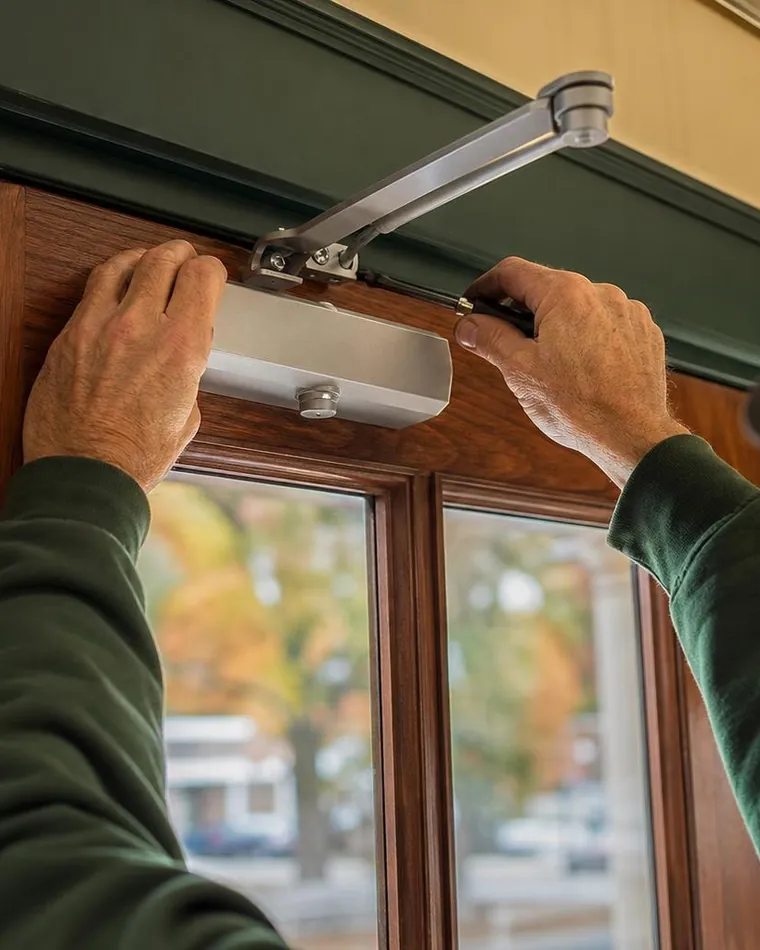
How door closer installation works in Exton
If your door in Exton never fully latches, it may be stopping just short of the frame or closing without enough force to catch.
Wind, a poorly adjusted door closer, or a problem with the latch can all play a part. We look at how the door moves and whether it catches before deciding what needs attention. A unit that is still in good condition may need adjustment rather than replacement, giving the door enough closing force to latch without letting it slam.
A door that is hard to push open may have too much closing force. We balance the effort needed to open it against the force needed to bring it shut, while accounting for wind that can catch the door. If you see oil leaking from the closer, adjustment alone may not solve the problem, and replacement is an option. We also install one where a door needs it. In Exton, wind at an exposed entrance can affect how the door moves, so its settings need to account for those conditions.
What we ask when you call
When you call, we will ask whether the door is inside or outside, what it is made of, and which way it opens.
Wood, metal and glass offer different places to mount a closer, and the opening direction affects where it fits. Tell us whether a closer is already installed and, if so, whether you see oil leaking from it. A photo of the whole opening and the existing hardware shows us the space available.
We will also ask what happens as the door closes: does it slam, stop short or fail to latch? Mention if it feels heavy to open or if wind catches it. Those details describe the conditions the installation needs to address. Have the lock details ready, including whether it uses a key or has a push bar, and whether it catches when you close the door by hand. That tells us whether the existing hardware engages without help from the closing mechanism.
How the job goes on site
When we visit your property in Exton, we start by watching the door open and close, paying particular attention to where it slams.
We also look for an oil leak and check whether the latch catches or meets resistance. Wind and the weight of the door can affect its movement, so we consider those conditions before deciding what may need to change. If you have been holding it shut or forcing it open, tell us what you have noticed so we can include that in our assessment.
Before work begins, we explain what we found and whether the existing closer can be adjusted or needs replacement. A leaking unit may need to be replaced because adjustment will not restore the lost oil. If a new one is needed, we explain the choices, including how its strength affects the effort needed to open it and the force available to bring it shut. Once installed or adjusted, we check the closing motion and latching with you. You can try the opening yourself and tell us whether it feels manageable, while we check that it comes shut without a hard impact.
- You callWhich doors, who uses them.
- A few questionsHours and who holds keys.
- The plan, firstHardware and keys explained.
- Tested with youEach door we worked on.
Around Exton
At a door near Chester County Library and District Center in Exton, you notice an oily streak on the closer.
Your key may still unlock the door, but that does not tell you whether the door will close and latch on its own. Oil leaking from the unit usually points to a failed seal. Adjusting its closing speed will not repair that seal, so replacement is generally the practical choice.
Wind exposure and the effort needed to open the door both matter when choosing a replacement. A stronger unit may close against wind, but it can also make the door harder to open. We select one suited to the door and its conditions, with the aim of balancing opening effort against reliable closing and latching.
Keeping it working
Once your door closer is installed, let the door close on its own rather than pushing it shut.
Check that it moves smoothly and catches without a hard impact. Avoid propping it open or forcing it past its normal opening range, especially when wind is strong. Keep the opening clear so nothing interferes with its path, and do not turn the adjustment screws yourself. A small change can affect both opening resistance and the way it closes.
If slamming returns, or you have to push hard to open it, call us to check the adjustment. Oil on the closer or on the floor beneath it is another reason to get in touch. A leak can point to an internal failure, so changing the setting may not address it. Watch, too, for one that stops short of latching. Wind pressure can change how it moves, so note whether the problem happens only in gusty conditions.
Your questions, answered
Will installing a closer on my office door mean I need a different key?
No, installing a closer does not normally change the key for your office door. The closer controls the door's movement, while the lock and key control access. You can keep using the same key and lock unless you choose separate lock work. Replacing the closer does not automatically replace the lock.
Can a closer keep my storefront door open while I carry deliveries inside?
Yes, some closers have a hold open feature, but it is not appropriate for every door. The feature keeps the door in an open position until you move it toward the frame, after which it closes on its own. A door that must close on its own without anyone releasing it needs a different arrangement.
Does the closer have to go on the outside face of my glass storefront door?
No, a closer does not always have to be mounted on the outside face of a storefront door. Some surface mounted models fit on the interior side, while concealed designs sit within the door or frame. The available space and the door's construction limit those choices, and a concealed design may not fit an existing entrance.
Closest towns we cover
Door Closer Installation near Exton
Each door opens our door closer installation page for that town.
More locksmith services in Exton
- Panic Bar Installation
- Lock Replacement
- House Lockout
- Lock Rekeying
- Keyless Entry Systems
- Ignition Repair
- Transponder Key Programming
- Smart Lock Installation
- Car Key Replacement
- Safe Opening
- Business Lockout
- Commercial Lock Installation
- Lock Repair
- Car Key Duplication
- Master Key Systems
- Deadbolt Installation
- Mailbox Lock Replacement
- Key Fob Programming
- Broken Key Extraction
- Car Lockout
Ready when you are
Office visits in West Chester are by appointment only; the work happens at your door or your car.
Call (484) 488-7719