
Commercial locksmith · Newark, DE
Door Closer Installation in Newark, DE
We bring door closer installation to business doors across Newark. When you call, we tell you plainly when we can come.
- 3 years in business
- Open 6 days a week
- Cars, homes and businesses
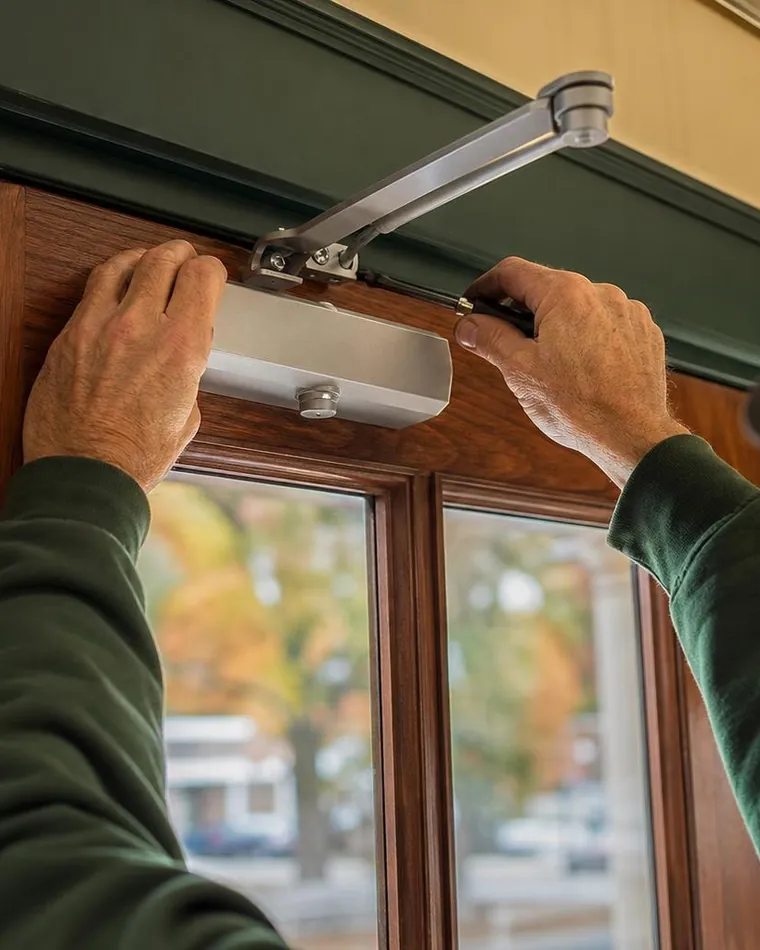
How door closer installation works in Newark
When a door never fully latches, it may rest against the frame without the latch catching.
In Newark, that can mean you have to pull it shut yourself or find that it has swung open. The closing force and the final movement both matter: too little force may leave the latch short of its strike, while too much can make the door slam. We examine how the entrance moves and adjust the closer where its condition and settings allow. If another problem is keeping it from shutting properly, we explain what we find.
An entrance that is hard to push open calls for a balance between opening effort and enough force to close. Wind can make that balance harder to achieve, particularly at exposed entrances. An oil leak may mean the closer needs replacement rather than adjustment, since its internal fluid controls its movement. We install a suitable unit for the opening and set it for the conditions at your Newark property. The choice of unit and where it is mounted affect how it operates, so we explain those options as well.
Before we head your way
When you call, we will ask whether the door slams, stops short of latching, or feels heavy to open.
Tell us if wind catches it and whether the trouble happens only with a strong gust. Those details help us understand the closing force and control the opening may need. If there is already a closer, mention any oil on or beneath it, since a leak may mean adjustment alone will not solve the problem.
Have a few details ready about the door: whether it is metal, wood, or glass, whether it opens inward or outward, and where the existing unit is mounted, if there is one. Its size and mounting position affect which replacement will fit. Tell us what kind of lock you have and whether the latch catches when you close it by hand. That helps us distinguish a closing problem from a possible issue with the lock.
Once we reach the business door
We look at the closer for oil around its body and check how the door moves, closes and latches.
Oil on the surface may point to a leak, so we also look for signs that it came from another source. If the unit is losing oil, adjustment alone will not restore its control, and replacement is usually the practical choice. Before work begins, we explain what we found and whether the existing unit can still be adjusted.
For a replacement, we explain the choices in closing strength and mounting. More closing force may help the latch catch, but it can also make the door harder to open. We consider wind exposure and whether the new unit fits the existing mounting points. Once it is installed, we adjust the closing and latching speeds, then open and release the door with you to check its movement. You can try it yourself and tell us whether the opening resistance feels manageable.
- You callWhich doors, who uses them.
- A few questionsHours and who holds keys.
- The plan, firstHardware and keys explained.
- Tested with youEach door we worked on.
Close to home in Newark
Near Newark Reservoir, you put your key away and push on a heavy door, but it takes more effort than you expect to get through.
A closer set too tightly is one possible cause, though the weight of the door itself also matters. Avoid forcing an adjustment yourself. A change to the closing force can affect whether it shuts securely behind you.
The key choice is how to balance easier opening with enough force to close and latch. A lighter setting may make the door easier to push, but wind can work against it as it closes. We consider both the effort needed to open it and whether it latches reliably. If an adjustment cannot provide that balance, a different closer may be worth considering.
What to watch for afterward
Keep the doorway clear and use a doorstop intended for it rather than wedging something against the closer or its arm.
Avoid forcing the door past its normal opening, especially when wind catches it. If the door needs to stay open, use a hold open device intended for that door. Let it close on its own instead of pushing it shut, so you can notice a change in how it latches.
A door that starts slamming again or no longer latches is worth another call. The same goes for oil on the closer or a door that takes unusual effort to open. Avoid turning adjustment screws yourself or taking the unit apart. Oil may be under pressure, and an adjustment could change how the door moves. We can check whether the settings need attention or whether a leaking unit needs replacement.
Common questions about door closer installation
Will I need a different key if a closing device is added to my office door?
No. The device operates separately from your lock, so adding one normally leaves your existing key unchanged. Its mounting still has to fit the space around the hardware already on the door. If that space is limited, a different mounting position or a different model may be needed.
Can the same type of closer work on my glass storefront door and my wooden back door?
Yes, a hydraulic model can be suitable for both, provided each unit matches its door and mounting location. The doors do not have to use identical units. Their width, weight and available mounting surfaces matter when choosing each one. A glass storefront door with a metal frame also needs enough suitable mounting space for the selected model.
Can I have my office door stay open while I carry boxes through it?
Yes, a hold open device is one option, though the right choice depends on the door. Some closers have that feature built in, while a separate holder is another possibility. A fire door needs a suitable release arrangement so it can close if a fire occurs. A basic mechanical holder may not be appropriate there.
Closest towns we cover
Door Closer Installation near Newark
Each door opens our door closer installation page for that town.
More locksmith services in Newark
- Panic Bar Installation
- Ignition Repair
- Car Key Duplication
- Mailbox Lock Replacement
- Safe Opening
- Keyless Entry Systems
- House Lockout
- Broken Key Extraction
- Business Lockout
- Commercial Lock Installation
- Car Key Replacement
- Lock Repair
- Transponder Key Programming
- Lock Rekeying
- Lock Replacement
- Car Lockout
- Master Key Systems
- Deadbolt Installation
- Smart Lock Installation
- Key Fob Programming
Talk to a locksmith
Office visits in West Chester are by appointment only; the work happens at your door or your car.
Call (484) 488-7719