
Commercial locksmith · Ridley Park, PA
Door Closer Installation in Ridley Park, PA
Door Closer Installation in Ridley Park, planned around how your business uses its doors. One call gets you a plain answer about when we can be there.
- 3 years in business
- Open 6 days a week
- Cars, homes and businesses
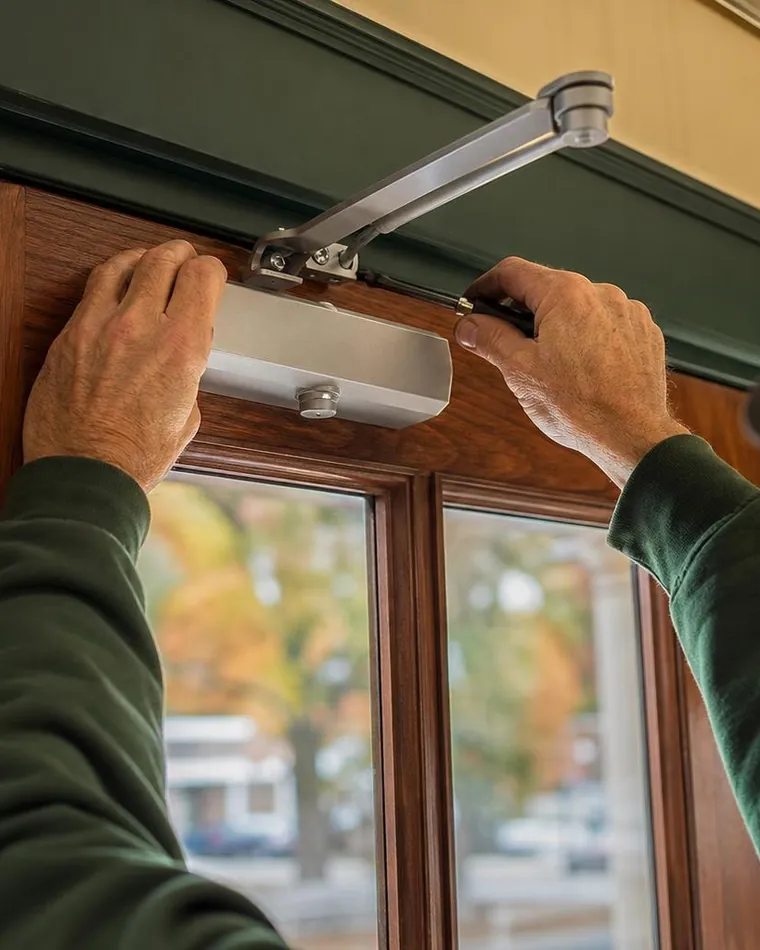
Door Closer Installation for Ridley Park businesses
A door that never fully latches may drift open, leaving you unsure whether it is secure.
In Ridley Park, we install and adjust door closers so the door moves shut and the latch engages. The device controls the swing, but an incorrect setting or a worn unit can leave the door short of the frame or make it slam. If the door is hard to push open, the closing force may be set too high, or the device may not suit the door.
Wind can catch a door and pull it open or push it shut with force. We consider those conditions when adjusting an existing closer or choosing a replacement in Ridley Park. If the device is in sound condition, an adjustment may correct its movement. Oil leaking from it usually means replacement is needed, since adjustment will not restore the lost fluid. For a new installation, we match the device to the door and its use, balancing a manageable opening effort with enough force to bring it shut.
What we ask when you call
When you call, we will ask where the opening is, whether it leads outdoors, and what the door is made of.
Wood, metal, and glass assemblies offer different places to mount a closer. Tell us which side has the hinges and whether it swings toward or away from you. A photo from each side can show us the available mounting space and whether anything might obstruct the arm.
Have the lock type ready, such as a keyed knob, lever, or exit bar, and tell us whether the latch catches when you pull the door shut by hand. That distinction helps us understand whether the closing problem may involve the lock as well as the closer. Mention any oil on the existing unit, resistance when opening, or wind pulling the door out of your hand. These details help us identify what adjustment or replacement may be needed and what conditions the installation must handle.
Step by step at the business door
We look for oil around the closer and its mounting points, then watch how the door moves and latches.
Oil on the housing can indicate an internal leak, which adjustment alone will not fix. We also check whether the opening force feels excessive and whether wind is pushing the door off course. Before starting, we point out what the leak and movement tell us, and explain whether an adjustment is worth trying or replacement is the practical choice.
If the unit is leaking, you may need a new one rather than a refill. We explain the options for a replacement that fits the opening and suits how you use it, including the tradeoff between easier opening and enough closing force to latch. Once the unit is installed, we adjust the closing and final latching action, then check it with you. You can try the door yourself so we can see whether it opens comfortably and closes fully under the conditions present.
- You callWhich doors, who uses them.
- A few questionsHours and who holds keys.
- The plan, firstHardware and keys explained.
- Tested with youEach door we worked on.
Close to home in Ridley Park
Near East Ridley Avenue, a gust catches your entry door as you reach for it and pulls it wide.
When you bring it back, the door may swing shut before you are ready to go inside. Keep your key with you when you step out, so a windblown door does not leave you locked out.
For a door closer installation in Ridley Park, wind is worth considering alongside how much effort it takes to open the door. A stronger unit may bring the door shut against some wind, but it can also make the door harder to push open. A separate door stop limits how far the door can swing. The closer is meant to control closing, not absorb the force of a door blown wide.
What to watch for afterward
A door that had been slamming should now close under control and latch without a hard impact.
Notice whether it catches securely or stops short, and whether you have to push unusually hard to open it. Wind can change how the door behaves, so keep a firm grip when entering or leaving on a windy day. Avoid forcing the door past its normal opening range or wedging it open, since either can strain the closer.
If slamming returns, the door no longer latches, or opening it becomes difficult, call us to check the adjustment. Do not turn the adjustment screws yourself. Loosening one too far can release oil and damage the mechanism. An oily streak on the closer or floor is another reason to call us, because a leaking unit may need replacement rather than adjustment.
Questions people in Ridley Park ask
Will installing this device change how I use my key on the front entrance?
No, your key works the same way because the closing device does not replace or alter the lock. You still use it to secure or unlock the entrance. The device controls the movement of the door, while the lock controls access. Changing the key would require separate work on the lock.
Is the same type of closer suitable for my storm door and my main entrance?
No, those two openings often need different designs. A storm door may use a compact cylinder, while the main entrance may need an overhead unit suited to its weight and use. The designs attach differently and are not interchangeable just because both pull a door shut. Available space and the direction each door opens also affect which style fits.
Does the arm have to be visible outside my storefront entrance?
No, an exterior mounting position is not the only option. An interior position may be possible if there is enough solid space above the opening and clearance for the hardware to move. The shape of the entrance and the location of nearby surfaces can limit placement, so an inside mount is a choice only when there is a suitable place to attach it.
Closest towns we cover
Door Closer Installation near Ridley Park
Each door opens our door closer installation page for that town.
More locksmith services in Ridley Park
- Lock Replacement
- Business Lockout
- Car Key Duplication
- Panic Bar Installation
- Car Lockout
- Commercial Lock Installation
- Smart Lock Installation
- Safe Opening
- Lock Repair
- Mailbox Lock Replacement
- Car Key Replacement
- Deadbolt Installation
- Key Fob Programming
- Lock Rekeying
- House Lockout
- Master Key Systems
- Broken Key Extraction
- Ignition Repair
- Keyless Entry Systems
- Transponder Key Programming
One call to start
We take calls Sunday to Thursday from 7 AM to 10 PM and Friday from 7 AM to 4 PM.
Call (484) 488-7719