
Commercial locksmith · Upper Chichester, PA
Door Closer Installation in Upper Chichester, PA
Door Closer Installation in Upper Chichester, planned around how your business uses its doors. When you call, we tell you plainly when we can come.
- 3 years in business
- Open 6 days a week
- Cars, homes and businesses
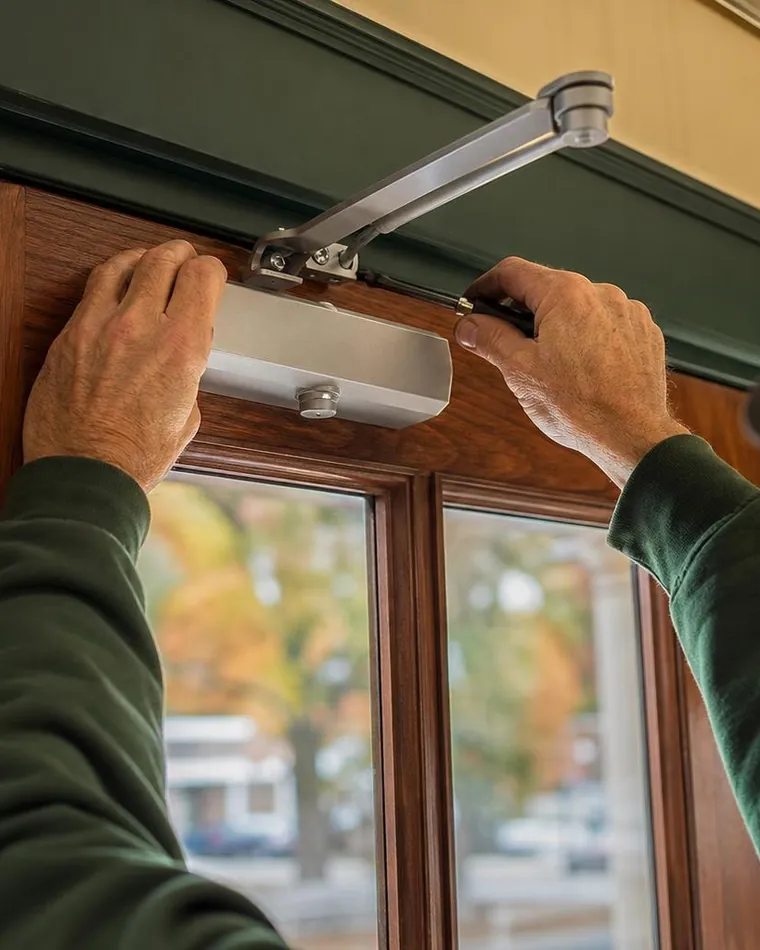
How door closer installation works in Upper Chichester
A door that slams shut can make an entrance unpleasant to use and leave you wondering whether it will stay closed.
In Upper Chichester, we install and adjust door closers to control how a door returns and help it latch on its own. If yours closes with a bang or stops short of catching, the setting may need adjustment. A heavy feel when you push it open can also point to too much resistance, though the cause is not always the closer.
Wind can catch the door when it is open and make it swing or slam, so exposure matters when choosing equipment and settings. Oil leaking from the unit is a different concern: it may no longer control movement reliably and may need replacement rather than adjustment. For a property in Upper Chichester, we can adjust an existing unit when it is suitable or install a replacement when it is not. If there is no unit in place, we can fit one suited to the opening and the way you use it.
What to have ready
When you call, tell us whether the door is slamming, failing to latch, or taking too much effort to open.
Mention if wind pushes it or catches it, since that affects what the closer needs to handle. We will also ask if there is an existing unit and whether you can see oil leaking from it. A leak may mean adjustment alone is not enough.
Have the door details ready if you can: whether it is inside or outside, what it is made of, its approximate width, and which way it swings. These details help us identify a suitable installation setup. Tell us what kind of lock or handle is on the door and whether it latches properly when you close it by hand. That distinction helps us understand whether the trouble involves the closing action or the lock itself. A photo of the door and its existing hardware is useful if you have one.
The work at your business door
We start by opening and closing the door to feel where the resistance occurs and see whether it rubs or catches.
We also look at the closer for oil leaks and check how it is mounted. A strong spring, an unsuitable unit or friction elsewhere may make a door feel heavy. Wind can add resistance, too, so we consider the conditions at the entrance rather than assuming one adjustment will solve everything.
Before work begins, we explain what we found and whether adjusting the existing unit is a practical choice or replacement makes more sense. A leaking unit usually needs replacement, while a different size or mounting position may change the effort needed to open it. We set the closing and latching speeds, then ask you to try the entrance with us. You can tell us where it feels too heavy or closes too hard, and we check that it reaches the latch without relying on a slam. A setting that feels easier to open still needs enough force to close against wind and normal resistance.
- You callWhich doors, who uses them.
- A few questionsHours and who holds keys.
- The plan, firstHardware and keys explained.
- Tested with youEach door we worked on.
Close to home in Upper Chichester
A door near Market Street in Upper Chichester may swing nearly shut but stop short of latching.
You might turn the key and think the entrance is secure, yet the door can still be pushed open if the latch has not engaged. Pull it closed and check that it catches, without forcing it against the frame.
For a call about this problem, wind is worth considering. Air pressure can push against the closing motion, while too much closing force may make the entrance hard to open. We look at how the closer moves through the final part of its travel and whether adjustment is suitable or a new unit is needed. The aim is an opening that feels manageable and has enough closing force to engage the latch.
After the job
Wind can catch an entry door and pull it beyond its normal swing.
Keep a hand on it when you enter or leave in gusty weather, and avoid letting it blow open against a wall. Keep mats and debris clear of the opening so they do not interfere with closing or latching. If you need to hold the door open, use a suitable doorstop rather than forcing it past its normal travel.
Watch for slamming, failure to latch, or a change in how hard the door is to open. Oil on or below the closer is another sign that something is wrong. Avoid turning the adjustment screws yourself, since turning one too far can release oil from the unit. Call us if these problems appear. An adjustment may address the closing or opening action, while a unit that has lost oil may need to be replaced.
Your questions, answered
Will a closer lock my shop door when it shuts, or will I still need my key?
No, a closer controls how the door shuts, but it does not lock it. Whether the entrance locks on its own depends on the lock already in place and how it is set. You may still need your key to secure the entrance, even if it closes and latches by itself.
Can I keep my entrance door open while I bring boxes inside?
Yes, some closers have an option that holds the entrance open until you release it. That feature is separate from the regular closing adjustment. A door intended to limit fire spread may need a release that lets it close during a fire, so an ordinary hold open option may not be suitable.
Does the closer have to go on the outside of my storefront door?
No, it does not always have to be on the exterior face. Some surface mounted models can be placed on the interior side, though the swing of the door and the available space affect which arrangement fits. Concealed designs also exist, but they need a door and opening made to accommodate them.
Closest towns we cover
Door Closer Installation near Upper Chichester
Each door opens our door closer installation page for that town.
More locksmith services in Upper Chichester
- Commercial Lock Installation
- Master Key Systems
- Business Lockout
- Keyless Entry Systems
- Lock Rekeying
- Transponder Key Programming
- Car Lockout
- Car Key Replacement
- Ignition Repair
- Panic Bar Installation
- Broken Key Extraction
- Mailbox Lock Replacement
- House Lockout
- Smart Lock Installation
- Lock Replacement
- Deadbolt Installation
- Key Fob Programming
- Car Key Duplication
- Lock Repair
- Safe Opening