
Commercial locksmith · West Norriton, PA
Door Closer Installation in West Norriton, PA
We bring door closer installation to business doors across West Norriton. One call gets you a plain answer about when we can be there.
- 3 years in business
- Open 6 days a week
- Cars, homes and businesses
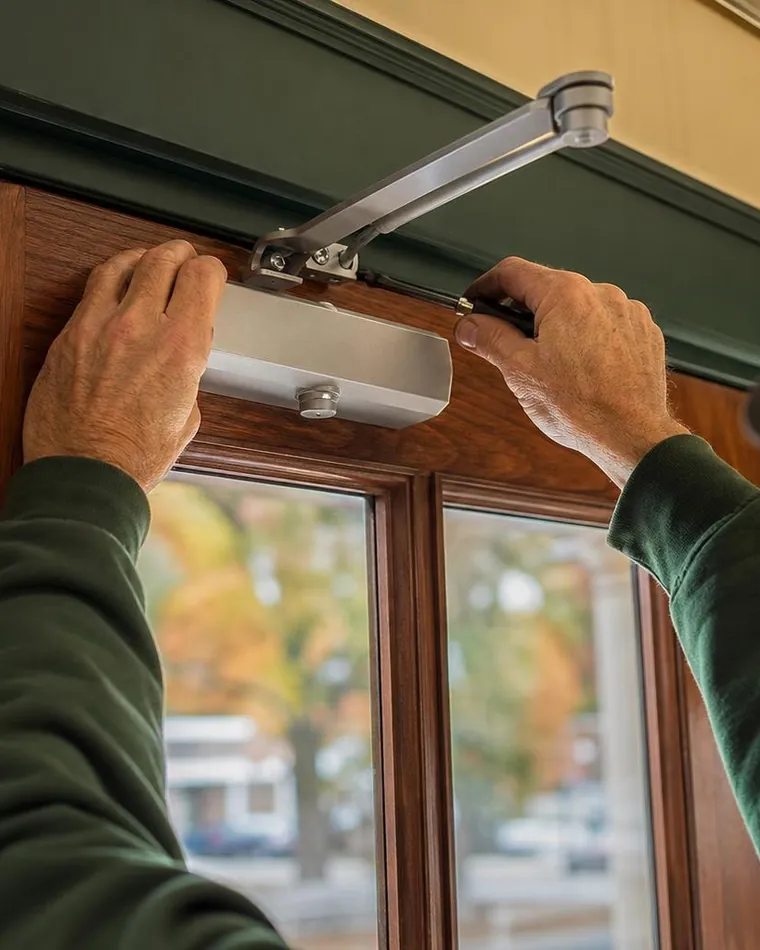
When you need door closer installation in West Norriton
Oil leaking from a door closer is a sign that it may no longer control how the entry shuts.
You might notice a slam, an uneven swing or a latch that does not catch. In West Norriton, we assess the problem and determine whether the leaking unit needs replacement. Adjusting it will not stop an oil leak, and wiping away the oil does not restore the fluid inside. If the unit is failing, we install a replacement suited to the opening and set it to close and latch.
When a unit is not leaking, adjustment may be an option. A door that takes too much effort to open may need a different setting or a different closer, while one that swings shut too hard may need its closing motion adjusted. Wind can catch an open entry and put extra force on it, so the choice of equipment matters as well as the setting. For properties in West Norriton, we consider how the entry is used and explain whether adjustment or installation makes sense for the problem you are having.
Questions we ask on the phone
On the phone, we ask what happens when you open and release the door.
Tell us if it slams, takes extra effort to open, or stops before it catches. We also ask whether wind pushes against it and whether an existing closer has oil on or beneath it. These details point us toward the conditions affecting its movement and whether adjustment or replacement may be worth considering.
Have the door's material, approximate width, and whether it opens inward or outward ready to share. That information helps us identify a suitable mounting arrangement. If you can, have a clear photo of both sides and the existing closer available. We also ask what kind of lock is fitted, whether its latch catches when you pull the door closed by hand, and whether a separate deadbolt is present. Those details show how the hardware must work together for the opening to close and stay shut.
The work at your business door
When we visit, we look at how the entry door swings, how it is exposed to wind, and whether it reaches the latch on its own.
We also check the existing closer for oil leaks and look at where a replacement could fit. Before starting, we explain whether adjustment is a practical choice or whether a leaking unit calls for replacement. You may need to choose between a stronger closing action and an opening force that feels manageable, since those goals can pull against each other.
If installation is needed, we fit the selected unit and adjust its closing action, including the final movement into the latch. Then we open and release the door with you so you can feel the resistance and see whether it closes fully. We also consider how wind affects that movement. A gust can overcome the closing force or catch the door as you open it, so you may still need to hold it in windy conditions. We explain what the settings do and what you can expect from them.
- You callWhich doors, who uses them.
- A few questionsHours and who holds keys.
- The plan, firstHardware and keys explained.
- Tested with youEach door we worked on.
Around West Norriton
A door near Trooper Road in West Norriton might swing nearly shut but stop short of the latch.
The key may turn even though the door has not caught, so do not assume it is secure just because the key turns. Check that the door has caught before relying on it, and avoid forcing it against the frame.
For a door like this, closing force has to be balanced against the effort needed to open it. Wind can push against the door and keep it from catching, while too much force can make entry difficult. An existing closer may need adjustment, but oil leaking from it points toward replacement. If the latch does not line up with its opening, installing a new closer alone may not solve the problem.
Looking after it
Keep the area around your door clear so it can close on its own, and avoid wedging it open or forcing it past its normal opening.
Wind can pull it from your hand or push it against its stop, so hold it as you go through when conditions are gusty. Wipe dust from the closer with a dry cloth. Avoid spraying lubricant into it or turning its adjustment screws yourself.
If the door begins slamming again, fails to latch, or takes noticeably more effort to open, call us to look at it. A change in how it closes may mean an adjustment is needed, but the closer could also be worn or leaking. Look for an oily film on its body or drips beneath it. A leaking unit may need replacement rather than another adjustment, since fluid loss affects its ability to control the door.
Questions people in West Norriton ask
Can I have a concealed closer on my glass storefront door instead of a visible one?
It may be possible, but the glass and surrounding metalwork determine the choices. A concealed unit sits inside the door or surrounding structure, while a surface mounted unit remains visible. Glass panels cannot accept mounting points in the same way as solid doors, so the existing construction matters when choosing a design.
Can I choose a model that holds the entrance open for deliveries and still closes on its own?
Yes, some models have a hold open feature that lets you leave the entrance open for deliveries. That feature keeps it in position until you release it, while a standard model starts closing after you let go. The available mounting space and existing hardware affect which designs fit your opening.
Will installing one mean I need a different key for my existing entrance lock?
No, adding one does not by itself require a different key. The closing mechanism controls how the entrance moves, while your existing lock and key control whether it is secured. Your current key belongs to a separate system, so choosing a closing device does not mean choosing a new lock.
Closest towns we cover
Door Closer Installation near West Norriton
Each door opens our door closer installation page for that town.
More locksmith services in West Norriton
- Car Lockout
- Keyless Entry Systems
- Smart Lock Installation
- Ignition Repair
- Mailbox Lock Replacement
- Business Lockout
- Safe Opening
- Lock Repair
- Transponder Key Programming
- Lock Rekeying
- Car Key Duplication
- Panic Bar Installation
- Broken Key Extraction
- Key Fob Programming
- Master Key Systems
- Deadbolt Installation
- Car Key Replacement
- Lock Replacement
- House Lockout
- Commercial Lock Installation
Questions about your lock?
Tell us the town and the problem, and we take it from there.
Call (484) 488-7719