
Commercial locksmith · Newtown Square, PA
Door Closer Installation in Newtown Square, PA
We bring door closer installation to business doors across Newtown Square. Call and we tell you honestly when we can be there.
- 3 years in business
- Open 6 days a week
- Cars, homes and businesses
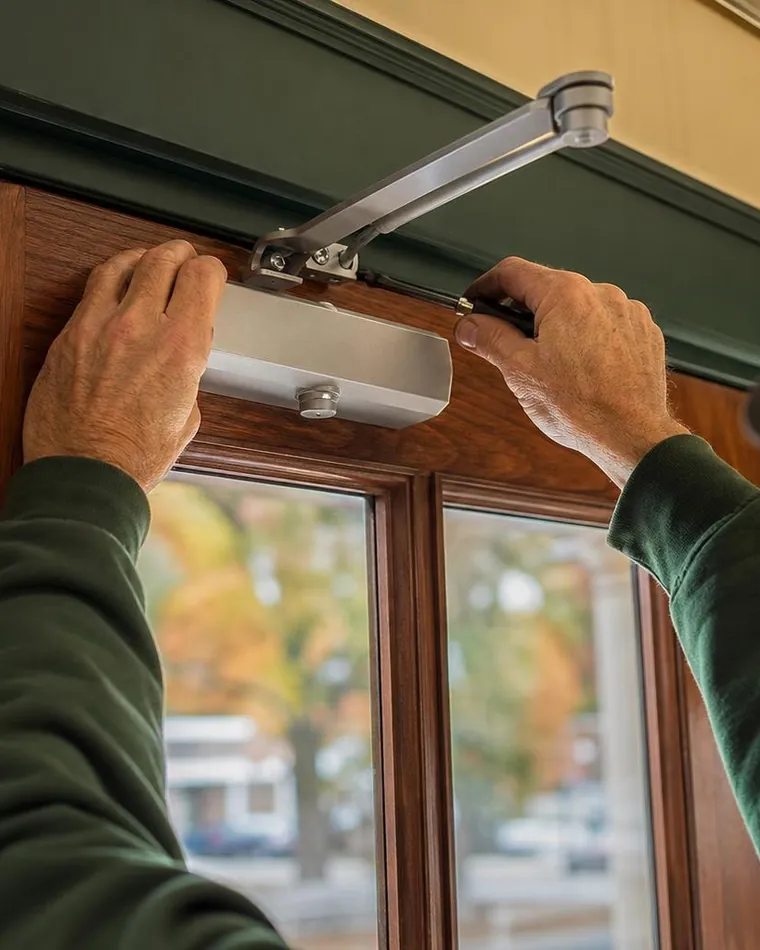
Door Closer Installation for Newtown Square businesses
Wind can catch an entry door in Newtown Square, pulling it wide or pushing it shut with a bang.
If it does not latch on its own, the entrance may be left unsecured. A door closer controls the swing and guides it toward the frame, but its settings need to suit the opening. When the entrance feels heavy to push, more closing force is not always the answer. We look at how it moves and whether the existing closer is suited to the job.
In Newtown Square, we install a new unit when there is none in place or when the existing one is leaking oil and needs replacement. If the equipment is sound, adjustment may be an option instead. We adjust the closing motion and the final pull into the latch, keeping both opening effort and secure closing in mind. Wind pressure and the weight of the panel affect how it behaves, so we check whether it closes fully after adjusting the motion.
Questions we ask on the phone
Have a few details about the opening ready when you call. We will ask about the door's material and size, whether it opens outdoors or between rooms, and whether it has one leaf or two.
The direction it swings matters, too. These details help us understand the available mounting space and the force needed to move it. If wind pushes against it, mention that as well, since outdoor pressure affects how it closes.
Describe what happens during use: does it slam, stop short of closing, or feel heavy to open? If there is already a closer, look for oil on its body or below it, but leave its screws alone. Describe the lock, such as a keyed knob or lever, and whether the door stays shut if you guide it closed yourself. That helps separate a problem with the closing motion from one at the latch. A clear photo of the opening and its hardware is useful if you have one available.
How the job goes on site
At your visit, we check whether the door swings freely and meets the frame squarely, then look at how the latch lines up with its opening.
We also examine the existing closer for oil leaks and watch its closing action. A latch that stops short may need an adjustment, but rubbing or poor alignment can be part of the problem. Before starting work, we explain what we find and whether adjusting the existing unit is worth trying or replacing it is the better choice.
If a new unit is needed, we explain which options suit the door's size and weight and how they affect the effort needed to open it. We set the closing and final latching speeds, with attention to a controlled close rather than a slam. After the work, we open and release it from different positions and check that it catches. You can try it with us, so we can assess both the opening effort and the way it closes under normal conditions.
- You callWhich doors, who uses them.
- A few questionsHours and who holds keys.
- The plan, firstHardware and keys explained.
- Tested with youEach door we worked on.
Local to Newtown Square
Near Aronimink Golf Club in Newtown Square, you turn your key, step through a door and hear it slam shut behind you.
A gust may have caught it, or its closer may no longer be controlling the swing. Keep your fingers away from the closing edge, and do not try to catch it as it swings. The force can be hard to judge, especially when wind is involved.
A closer needs enough force to bring the door to the latch, but a stronger spring can make it harder to push open. We select a unit for the width of the opening and the weight it has to move, keeping that tradeoff in mind. Exposure to gusts matters in the choice too.
What to watch for afterward
After installation, notice how much effort it takes to open the door and whether it moves smoothly.
Some resistance is normal, but you should not have to strain to get through. Avoid forcing it wider than its intended range or hanging bags and other weight from it. When wind is strong, keep a hand on the door so it does not swing out of your control. Avoid propping it open.
A change in opening effort, a slam, or a failure to latch is worth a call back, especially if wind makes the problem worse. Oil on the closer or beneath it can point to an internal leak, which an adjustment will not fix. Don't turn the adjustment screws yourself or try to take the unit apart. We can check the movement and determine whether an adjustment or replacement is needed.
Door Closer Installation questions from Newtown Square
Will installing a closer on my apartment door mean I need a new key?
No, installation does not ordinarily require a new key. The closing mechanism works independently of the lock, so your existing key can usually stay in use. Hardware already occupying the intended mounting area may limit the available arrangement. Your building may also have its own rules about changes to an apartment entrance, so check with the property manager before choosing an installation.
Does the closing mechanism have to be visible on my Newtown Square office entrance?
No, some models are concealed when the entrance is closed. A concealed option needs a compatible entrance and mounting space, so it is not available for every opening. A surface mounted model remains visible but offers another choice where a concealed one will not fit. The appearance and available space both matter when choosing between them.
Can I keep my restaurant entrance open while bringing supplies inside?
Yes, some models have a feature that holds the entrance open until you release it. While held open, the entrance will not close and latch on its own. A model without that feature closes instead. If the entrance is meant to close for fire protection, a simple manual hold feature may not be suitable; the release arrangement matters.
Closest towns we cover
Door Closer Installation near Newtown Square
Each door opens our door closer installation page for that town.
More locksmith services in Newtown Square
- House Lockout
- Key Fob Programming
- Panic Bar Installation
- Car Key Duplication
- Broken Key Extraction
- Lock Repair
- Lock Replacement
- Mailbox Lock Replacement
- Smart Lock Installation
- Transponder Key Programming
- Business Lockout
- Car Key Replacement
- Car Lockout
- Safe Opening
- Deadbolt Installation
- Keyless Entry Systems
- Ignition Repair
- Master Key Systems
- Commercial Lock Installation
- Lock Rekeying
One call to start
Office visits in West Chester are by appointment only; the work happens at your door or your car.
Call (484) 488-7719