
Commercial locksmith · Broomall, PA
Door Closer Installation in Broomall, PA
Mobile door closer installation for storefronts and offices around Broomall. One call gets you a plain answer about when we can be there.
- 3 years in business
- Open 6 days a week
- Cars, homes and businesses
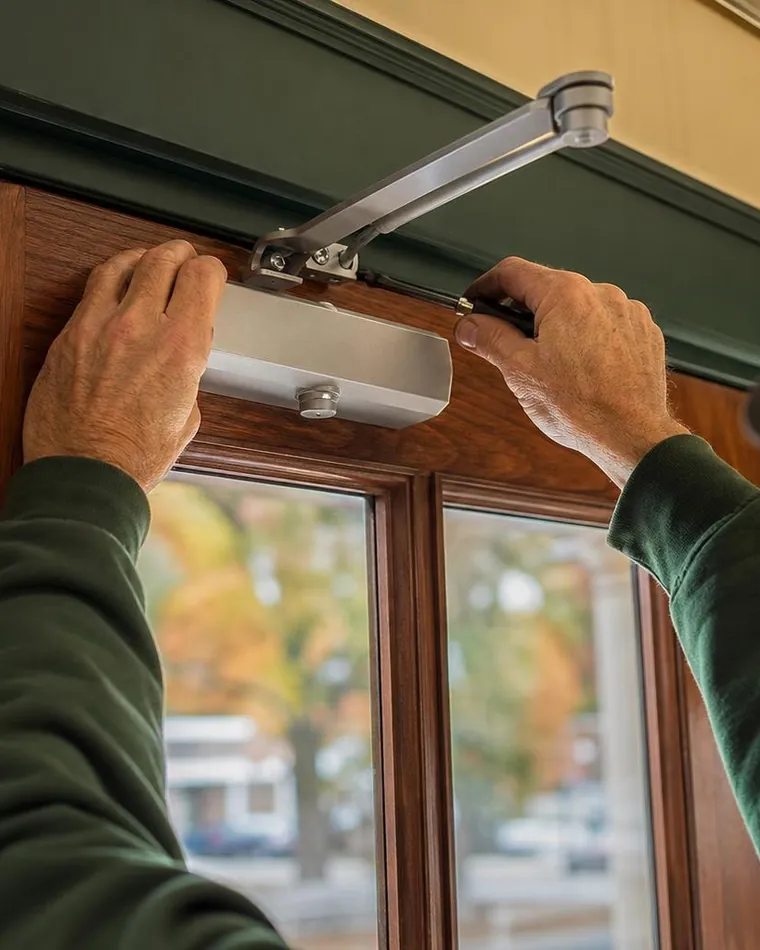
What door closer installation involves
Wind can catch an entry door and push it open or make it slam shut.
In Broomall, that can leave you dealing with a noisy entrance, a door that will not latch, or one that feels heavy when you push it open. A closer controls the closing movement, but its setting needs to suit the entrance. We install and adjust these devices so the entrance closes in a controlled way and the latch has enough force to catch.
If the existing unit is in good condition, an adjustment may be enough to ease the opening force or change the way it closes. Oil leaking from a closer is a sign that replacement may be needed, because an adjustment cannot restore lost fluid. We also install a new unit where there is none. In Broomall, we consider the effect of wind and the force needed to open the entry when choosing and setting the device, so you understand the tradeoff between easier opening and reliable closing.
Questions we ask on the phone
We will ask what happens as the door moves: does it strike hard, stop short of the frame, or take too much effort to open?
Tell us if wind tends to catch it, or if you have noticed oil leaking from the existing closer. These details help us understand whether an adjustment might be enough or a replacement may be needed.
Have the material and approximate width of the door ready, along with whether it opens inward or outward. Those details affect the choice of hardware and where it can be mounted. We will also ask whether you have a keyed lock, a push bar, or another way to keep it shut, and whether it catches when you close it by hand. That helps us understand how much force is needed at the end of the swing and whether the closing mechanism is the only concern. A photo of the opening and existing hardware gives us a clearer view of the setup.
How the job goes on site
We start by looking for the source of the oil and watching how the door moves and latches.
Oil on a closer can point to a worn internal seal, which an adjustment will not repair. We explain what we find before starting work, including whether an adjustment is worth considering or whether replacement is the better choice. A leaking unit may no longer control the door reliably, even if it still closes.
For a replacement, we consider the weight of the door, the effort needed to open it, and whether wind tends to catch it. You may have a choice of units or mounting positions. We explain how those choices affect opening and closing, and whether installation will need new mounting holes. Once the unit is installed, we adjust the closing and latching action, then check it with you. You can try opening the door and watch it close so we can address a slam, a missed latch, or resistance that feels excessive. Wind can still affect how the door moves, particularly when it is open.
- You callWhich doors, who uses them.
- A few questionsHours and who holds keys.
- The plan, firstHardware and keys explained.
- Tested with youEach door we worked on.
Around Broomall
Near the Thomas Massey House, you notice a door swings shut but stops just short of catching.
Before you turn the key, gently pull it closed and check that it has latched. If it binds, do not force it. Locking it while it is still partly open will not keep it shut.
In Broomall, wind pressing against a door can keep it from catching even when it closes properly in calm weather. Adding closing force may help, but it can also make the door harder to open. We consider that tradeoff when deciding whether the existing closer can be adjusted or a different one is needed. The aim is enough force to bring the door shut without making it unnecessarily heavy for you to push open.
Keeping it working
After installation, watch how the door moves through its full swing and meets the frame.
It should close smoothly and latch without a hard bang. Wind can push it shut with extra force or catch it as you open it, so keep a hand on the door in gusty conditions. Avoid forcing it past its normal opening range or wedging it open against the closer.
If slamming returns, notice whether it happens in calm conditions or only when wind is blowing. Also watch for oil on the closer, a door that no longer latches, or resistance that makes the door difficult to open. Do not turn adjustment screws or take the unit apart, since its internal spring is under tension. Call us again if you notice these changes, so we can check whether an adjustment or replacement is needed.
Door Closer Installation questions from Broomall
Can the device hold my Broomall office door open when I move supplies?
Yes, some models have a hold open option, while others are made only to close the door. A hold open feature keeps it at a chosen position until you release it. That option is not suitable for every entrance, so the purpose of the opening matters when choosing a model.
Will installing a closer at my front door mean changing my lock or key?
No, installing one does not normally require changing your lock or key. The closer controls movement, while the lock controls whether the entrance is secured. An entrance can latch without being locked, so adding this device does not change how you secure or unlock it.
Does my glass storefront entrance need a visible unit, or are there other choices?
No, a visible unit is not the only style, but a concealed model may not be a practical fit for your entrance. Surface mounted models sit in view, while concealed designs are built into the moving panel or its surrounding structure. Glass construction and available mounting space affect which type is a workable choice.
Closest towns we cover
Door Closer Installation near Broomall
Each door opens our door closer installation page for that town.
More locksmith services in Broomall
- Car Key Replacement
- Deadbolt Installation
- Ignition Repair
- Keyless Entry Systems
- Business Lockout
- Lock Replacement
- Master Key Systems
- Car Key Duplication
- Smart Lock Installation
- Transponder Key Programming
- Panic Bar Installation
- Commercial Lock Installation
- Car Lockout
- House Lockout
- Mailbox Lock Replacement
- Lock Repair
- Lock Rekeying
- Key Fob Programming
- Broken Key Extraction
- Safe Opening