
Commercial locksmith · Paoli, PA
Door Closer Installation in Paoli, PA
We bring door closer installation to business doors across Paoli. Call and we tell you honestly when we can be there.
- 3 years in business
- Open 6 days a week
- Cars, homes and businesses
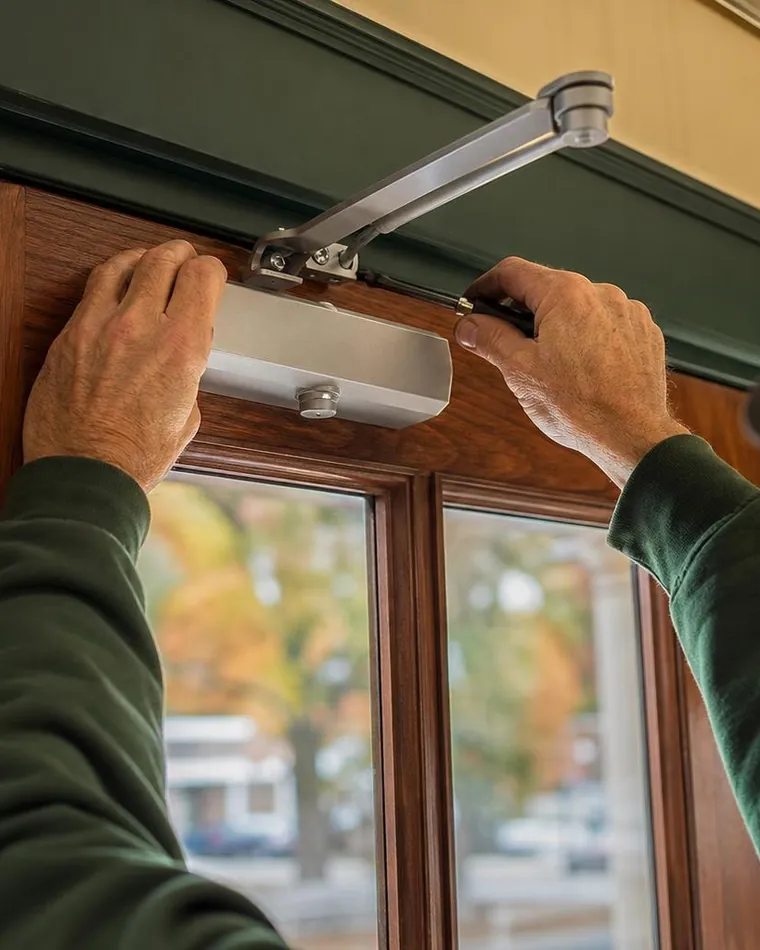
How door closer installation works in Paoli
An oil leak from a door closer usually means a seal has failed and the unit is losing fluid that controls its movement.
In Paoli, you may notice the door slamming or failing to latch as the fluid escapes. Adjustment will not repair the leak, so replacement is usually the practical choice. We install a new unit suited to the opening and its use, then adjust the closing and latching action. If it is striking hard, keep your hands clear of the edge and avoid trying to catch it as it swings.
An entrance that is hard to open or gets caught by the wind needs attention to both opening resistance and closing force. If the existing unit is not leaking, adjustment may be an option instead of replacement. We look at how it opens, closes and latches, then explain which choice fits the problem. At an exposed Paoli entrance, wind pressure is part of that assessment because it can push against the opening or catch it as it swings.
Before we head your way
On the phone, we ask whether the opening is indoors or exposed to the weather, since wind can affect how a closer works.
The material, such as wood, steel, or glass, matters for choosing a suitable mounting arrangement. Have a sense of which side you push to enter and whether the door swings left or right; that tells us how the unit may fit. Its approximate width and weight are useful too, because both affect the force needed to close it.
We also ask what happens as the door closes, whether it hits hard, stops before the latch catches, or takes effort to open. Those details help us understand what adjustment or replacement may be needed. Mention any oily residue near the existing unit, since a leak may point to replacement rather than adjustment. A photo of the top edge and lock side is useful, along with a description of the handle and whether a key is needed to secure it. That helps us distinguish latching from locking.
How the job goes on site
When we look at a leaking door closer, we check where the oil is coming from and how the door moves and latches.
Oil on the housing can point to a failed seal, and adjustment alone will not replace fluid that has escaped. We also look for loose mounting points and ask you to show us whether it slams, drifts shut or takes too much effort to open. Wind at the entrance matters too, since it can push against the closing action.
Before starting, we explain whether adjustment is a reasonable option or replacement makes more sense. A leaking unit often needs replacement because its sealed mechanism may not be serviceable. If a new unit is needed, we explain choices suited to the opening, including how much control each provides over the closing movement. Once installed, we adjust it and have you open and close it with us, checking whether it opens comfortably, closes without slamming and engages the latch. We also explain how wind may affect its operation.
- You callWhich doors, who uses them.
- A few questionsHours and who holds keys.
- The plan, firstHardware and keys explained.
- Tested with youEach door we worked on.
Close to home in Paoli
Your shop door near Lancaster Pike slams behind you when the wind catches it.
Before stepping outside to check it, take your key with you, since it could latch before you get back in. A hard slam does not tell you by itself whether the closer needs adjustment or replacement.
In Paoli, wind exposure is worth considering when choosing a closer for this kind of entrance. A model with enough closing force to pull the door shut against a gust may also take more effort to open. We consider its size and weight along with the exposure at the entrance, so the choice accounts for both opening effort and latching. A stronger unit is not automatically the best fit if it makes the entrance difficult for you to use.
After the job
Wind can catch an entry door before you have a firm grip on it.
Hold the handle when opening or closing it in gusty weather, and avoid letting it swing beyond its normal range. Don't pull on the closer arm to control the swing. After windy weather, watch for a change in how the door moves or whether it latches on its own.
Keep an eye out for oil leaking from the closer, a new slamming sound, or more resistance when you open the entry. Avoid turning adjustment screws yourself, since a small change can affect both the closing motion and the latch. If any of these signs appear, call us again so we can check the adjustment and look for a part that may need replacement.
Door Closer Installation questions from Paoli
Will a closer change how my key works on my Paoli storefront door?
No, adding one does not change how your key works. The device controls the door's movement and leaves the existing lock in place. You can keep using the same hardware unless you choose to change it separately. Having the door pull shut on its own does not mean it is secured against entry; you may still need to secure it yourself.
Can my office door stay open for deliveries without a prop if I add one?
Yes, you can choose a unit with a manual hold open setting. You release the setting when you want the door to close on its own again. That choice is different from a unit that always pulls the door shut. If the opening is part of a fire barrier, a manual hold open setting may not be suitable because it can leave the door open.
Can the closing hardware be hidden on my glass storefront door?
Yes, concealed hardware is an option for some glass doors, but the construction of the opening determines whether it will fit. A concealed unit needs space made for it, often in the floor or above the opening. A surface mounted unit remains visible and needs a suitable solid mounting area. Glass alone is not a surface to assume will support it.
Closest towns we cover
Door Closer Installation near Paoli
Each door opens our door closer installation page for that town.
More locksmith services in Paoli
- Safe Opening
- Business Lockout
- Mailbox Lock Replacement
- Car Key Replacement
- Keyless Entry Systems
- Broken Key Extraction
- Key Fob Programming
- Master Key Systems
- Lock Repair
- Panic Bar Installation
- Commercial Lock Installation
- Car Lockout
- Lock Replacement
- Deadbolt Installation
- Lock Rekeying
- Transponder Key Programming
- Car Key Duplication
- Smart Lock Installation
- House Lockout
- Ignition Repair
Ready when you are
We take calls Sunday to Thursday from 7 AM to 10 PM and Friday from 7 AM to 4 PM.
Call (484) 488-7719