
Commercial locksmith · Malvern, PA
Door Closer Installation in Malvern, PA
Door Closer Installation for shops, offices and buildings in Malvern. One call gets you a plain answer about when we can be there.
- 3 years in business
- Open 6 days a week
- Cars, homes and businesses
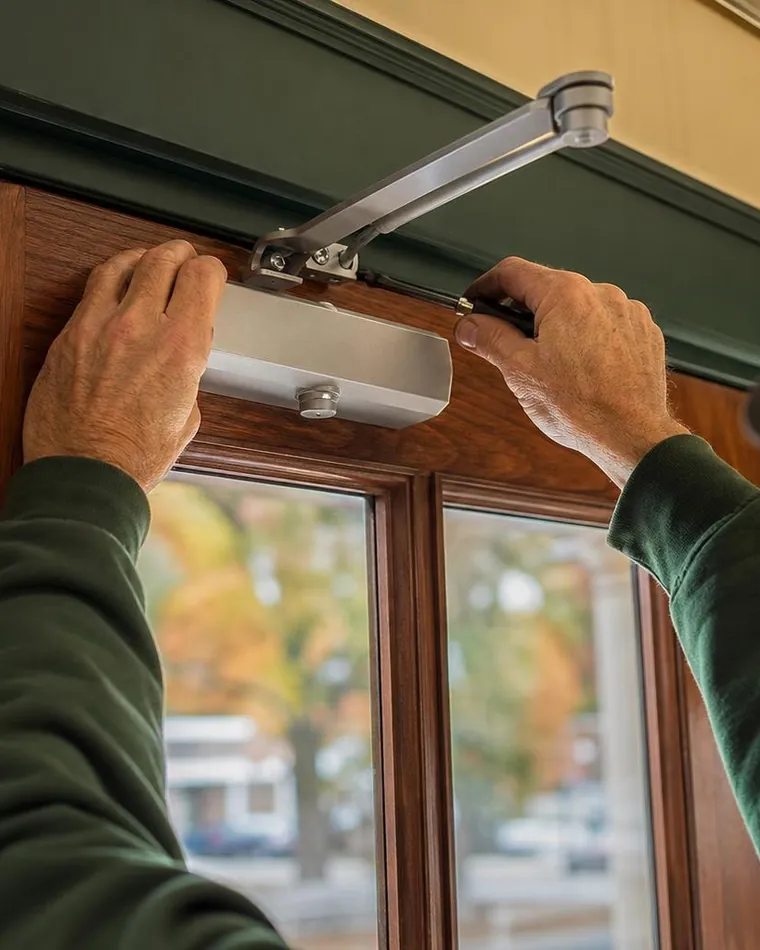
What door closer installation involves
A heavy door that is hard to open can make an ordinary entrance frustrating to use.
In Malvern, the closer may be set with more closing force than the entrance needs, or the unit may not be suited to the weight of the door. We install and adjust closers to balance opening effort with the force needed to pull the entrance shut. If it slams or stops short of latching, an adjustment may be enough when the existing unit is in good condition.
An oil leak is a different problem: fluid escaping from the closer usually means the unit needs replacement. Gusts can push an open entrance beyond its intended range and strain its fittings. In Malvern, we account for exposure to wind when selecting and setting up a new unit. More closing force can help the entrance latch against a gust, though it also takes more effort to open. We weigh both needs with you when deciding on the right setup.
Questions we ask on the phone
When you call, we will ask whether the door is inside or opens outdoors, what it is made of, and which way it swings.
These details tell us what kind of closer may fit and whether exposure to wind is part of the problem. Tell us if it slams, stops short of closing, or feels heavy to open. If an existing closer is leaking oil, mention that too, since adjustment alone may not address the trouble.
We will also ask what kind of lock you have and whether the latch catches when you gently push the door closed. That helps us understand whether the problem may involve how the opening is secured as well as how it closes. Have a photo of the full doorway and close photos of the existing hardware ready if you can. These give us a view of how the parts are arranged, while a visible label or model number may help us narrow down replacement options.
How the job goes on site
We look at how your entry door moves, whether it catches on the frame and how wind affects it when open.
We also check the existing closer for oil leaks and signs that it is no longer controlling the movement. Before starting, we explain what we found and whether an adjustment is a reasonable choice or the unit needs replacement. A leaking unit, for example, may no longer respond reliably to adjustment.
If you need a new closer, we explain which type suits the door and how its strength affects the effort needed to open it. A stronger unit may improve closing in windy conditions, but it can also make opening harder. We adjust the closing action and latch engagement, then check the result with you from several opening positions. You can try it yourself so we can address concerns about opening effort or slamming. Wind conditions can change, so the check also considers how the entrance behaves under the conditions present during the visit.
- You callWhich doors, who uses them.
- A few questionsHours and who holds keys.
- The plan, firstHardware and keys explained.
- Tested with youEach door we worked on.
Around Malvern
Oil leaking from the closer on your door near King Street in Malvern may mean an internal seal has failed.
If it slams or no longer latches, leave the adjustment screws alone instead of trying to compensate for the leak. Changing the closing speed will not fix a failed seal, and forcing an adjustment could make the problem worse.
Replacement may be the practical choice when the unit is leaking. We select a new closer suited to the weight and use of the door, with enough closing force for it to latch without making it unnecessarily hard to open. Wind exposure matters too, since gusts can put extra strain on the mechanism. Your existing key operates the lock separately, so replacement does not require changing the key.
Looking after it
If your door used to stop short of latching, check that it catches on its own without a push.
Keep mats and debris out of the opening, since they can prevent it from closing fully. In windy conditions, hold the handle firmly so a gust is less likely to pull it from your hand. Avoid forcing the door beyond its stop.
If it begins to slam, becomes hard to open, or will not latch reliably, call us again. Oil on the closer is another reason to have us take a look. We can check whether an adjustment is enough or whether a leaking unit needs replacement. Leave the adjustment screws alone and do not add oil. Incorrect settings can make the door harder to use or keep it from catching.
Questions people in Malvern ask
Will my key still work the same way after a closer goes on my back door?
Yes, your key should work as it did before because the closing mechanism and the lock do separate jobs. Pulling the door shut does not by itself turn a deadbolt. Some locks still need a key or thumb turn to secure them, even when the door has latched.
Can I leave my entry door open for deliveries if I add one of these devices?
You can choose a model with a hold open feature, though that feature is not available on every model. It keeps the door open until you release it, which can make carrying items through easier. For a fire door, the choice also needs to account for its role in containing smoke and flames.
For my glass entry door, is a concealed closer an option, or must it be visible?
It may be possible to choose a concealed model, but not every door has room for one. A surface mounted model remains visible, while a concealed design puts its mechanism out of sight. The choice also affects clearance and compatibility with the door and frame, so appearance is only one consideration.
Closest towns we cover
Door Closer Installation near Malvern
Each door opens our door closer installation page for that town.
More locksmith services in Malvern
- Car Key Replacement
- Business Lockout
- Safe Opening
- Ignition Repair
- Car Key Duplication
- Key Fob Programming
- Commercial Lock Installation
- Mailbox Lock Replacement
- Master Key Systems
- Lock Rekeying
- Transponder Key Programming
- Smart Lock Installation
- Deadbolt Installation
- Panic Bar Installation
- House Lockout
- Keyless Entry Systems
- Lock Replacement
- Car Lockout
- Broken Key Extraction
- Lock Repair
Need a hand with a lock?
We take calls Sunday to Thursday from 7 AM to 10 PM and Friday from 7 AM to 4 PM.
Call (484) 488-7719